
Article
University students recommend tutors, academic services, and study resources to their friends all the time. The Java Assistant Referral System turns those recommendations into an opportunity to earn money.
Students can refer eligible friends, classmates, and other university students to Java Assistant. When a referral qualifies under the current referral program, the person who referred the student can earn a reward.
This means your university network can become more than just a group of classmates. You can help students find academic support while earning from successful referrals.
What Is the Java Assistant Referral System?
The Java Assistant Referral System is a referral program that allows students and eligible users to introduce new students to Java Assistant and receive rewards from qualifying referrals.
Java Assistant is an academic support platform connecting university and school students with tutors and academic professionals across different subjects and services.
The concept is simple:
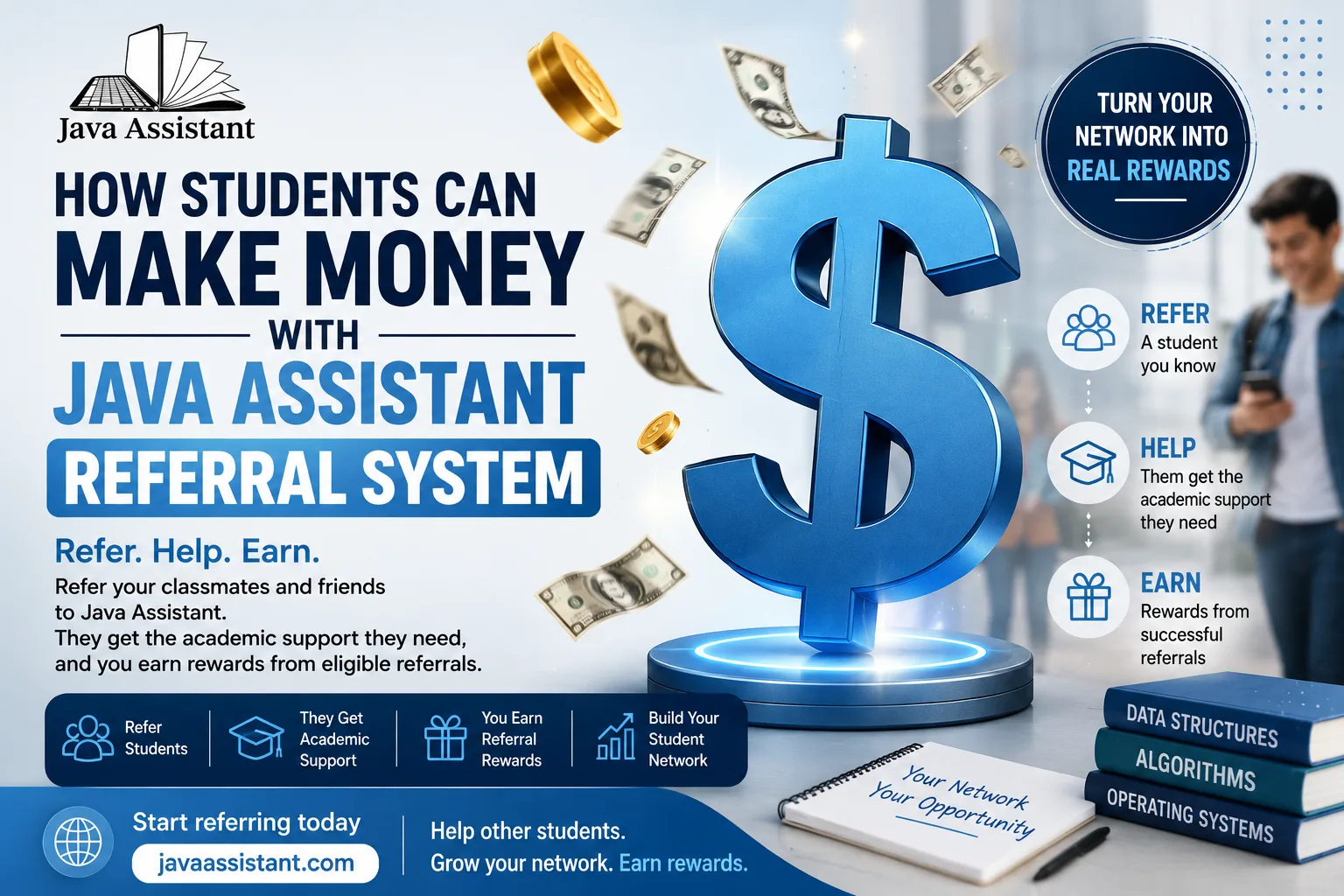
Refer a student → The student joins Java Assistant → They receive academic support → You can earn a referral reward.
The exact reward depends on the current Java Assistant referral conditions and the service selected by the referred student.
How Does the Java Assistant Referral System Work?
Getting started is simple.
Step 1: Get Your Referral Code
Access your personal Java Assistant referral code or referral method through the platform.
Step 2: Find Students Who Need Academic Support
Your friends, classmates, university groups, and wider student network may already contain students looking for tutors or academic support.
Step 3: Share Your Referral
Introduce the student to Java Assistant and provide your referral code.
Step 4: The Student Uses Java Assistant
The referred student registers and chooses the academic support they need.
Step 5: Earn Your Referral Reward
When the referral meets the applicable program requirements, the referral is tracked and the corresponding reward can be earned.
How Can Students Make Money With Java Assistant?
Students already have something valuable:
A university network.
Think about how frequently students ask questions such as:
“Does anyone know a tutor for this course?”
“Who can help me understand this subject?”
“Where can I find academic support before my exam?”
Instead of simply giving someone a random contact, you can introduce them to Java Assistant through your referral.
If that student becomes an eligible referral, your recommendation can generate a reward.
You do not need to become a tutor.
You are simply connecting a student who needs academic support with Java Assistant.
Who Can You Refer?
Depending on the current referral-program conditions, potential referrals can include:
- Friends
- University classmates
- Students from other majors
- Students from other universities
- Students in university communities
- Students looking for tutoring
- Eligible new Java Assistant students
Your referrals do not necessarily need to study the same major as you.
An engineering student might need mathematics tutoring.
A business student might need help understanding accounting or finance.
A computer science student might need support with a difficult programming course.
Another student might simply need additional academic guidance before an exam.
This gives students opportunities to refer people across different subjects and academic needs.
Why Is the Java Assistant Referral System Useful for University Students?
University students naturally build large networks.
These networks can include:
- WhatsApp groups
- University clubs
- Student societies
- Classes
- Group projects
- Social media communities
- Friends from different majors
- Students from other universities
Throughout every semester, students look for academic support.
That means students who know about Java Assistant can recommend the platform when someone genuinely needs help.
You do not need thousands of followers.
A trusted recommendation from one classmate to another can be much more valuable than sending hundreds of random advertisements.
A Simple Java Assistant Referral Example
Imagine you are studying at university and three classmates are struggling with a difficult course.
One of them asks:
“Do you know where I can find a tutor?”
Instead of searching for someone randomly, you introduce your classmate to Java Assistant using your referral code.
Your classmate registers, finds the academic support they need, and completes a qualifying service.
If the referral satisfies the current Java Assistant referral requirements, you can receive the corresponding referral reward.
Now imagine doing the same when students from different courses ask for academic support throughout the semester.
Your referral network can gradually grow.
How Can You Get More Java Assistant Referrals?
The best referral strategy is not spam.
It is relevance and trust.
Start with people you already know.
When a classmate genuinely needs academic support, introduce Java Assistant.
You can also share your referral in relevant university communities when promotion is permitted.
Instead of sending:
“Use my referral code.”
Provide value first.
For example:
“If you’re looking for academic support for that course, you can check Java Assistant. They have tutors for different university subjects.”
Then provide your referral information.
Students are more likely to respond when your recommendation actually solves a problem they have.
Can Student Communities Benefit From Referrals?
Students involved in university clubs, student societies, campus communities, social media pages, and university groups can have particularly strong networks.
These students frequently receive questions about:
- Tutors
- Difficult courses
- Exam preparation
- Academic support
- Projects
- Papers
- University subjects
When appropriate, Java Assistant can become one of the resources they recommend.
This can create a referral network that expands from:
One student → classmates → different majors → different universities → larger student communities.
Why Refer Students to Java Assistant?
Java Assistant is designed to make academic support easier to access.
Students can use the platform to find support across different subjects and academic needs rather than relying entirely on random recommendations.
For the referrer, this creates an opportunity to benefit from recommendations they may already be making.
For the referred student, it provides another way to discover academic support.
The result is a referral system designed around a simple idea:
Help students. Grow your network. Earn from eligible referrals.
Can You Make a Regular Income From Student Referrals?
Referral rewards can provide additional income, but they should not be treated as guaranteed income.
The amount a student earns depends on factors such as:
- Number of eligible referrals
- Services used by referred students
- Current referral rewards
- Program eligibility
- Successful completion of referral requirements
Some students may generate occasional referrals, while students with larger and more active university networks may have more opportunities.
The most sustainable strategy is to focus on genuine recommendations rather than trying to force referrals.
How to Start With the Java Assistant Referral System
You do not need to build a large business or become a professional salesperson.
Start with your existing student network.
When someone needs academic support:
Recommend Java Assistant.
When eligible:
Share your referral code.
When the referral qualifies:
Earn your reward.
As more students discover Java Assistant through your recommendations, your referral network can continue to expand.
Frequently Asked Questions
What is the Java Assistant Referral System?
The Java Assistant Referral System allows eligible users to refer new students to Java Assistant and receive rewards when those referrals satisfy the current program requirements.
Can students make money with Java Assistant?
Yes. Eligible students can earn referral rewards by successfully referring qualifying new students to Java Assistant. Earnings depend on the current referral terms and successful referrals.
Do I need to be a tutor to refer students?
No. You do not need to personally tutor the student. Your role is to introduce eligible students who need academic support to Java Assistant.
Can I refer my university classmates?
Yes, eligible classmates can be referred when they meet the requirements of the current Java Assistant Referral System.
Can I refer students from other universities?
Eligible students from other universities may also be referred, subject to Java Assistant’s current referral conditions and supported markets.
Does the referred student receive a discount?
Referral discounts or other benefits may be available depending on the active Java Assistant referral offer. Students should check the current program terms for the exact benefit.
Is referral income guaranteed?
No. Referral earnings are not guaranteed. Rewards depend on successful eligible referrals and the requirements of the current Java Assistant referral program.
Where can I learn more about the Java Assistant Referral System?
Visit javaassistant.com to learn more about Java Assistant, available academic support services, and the current referral program.
Start Earning With the Java Assistant Referral System
Your university network already has value.
The next time someone asks:
“Do you know where I can find academic support?”
you can introduce them to Java Assistant.
Help another student find the support they need while building your own referral network and earning rewards from qualifying referrals.
Refer. Help. Earn.
Visit: javaassistant.com
